Frozen & Burst Pipe Repair in Jamestown, NY
Jamestown sits in the Lake Erie lake-effect snow belt, and a large share of the city’s homes are 80–100+ years old with pipes running through uninsulated basements and exterior walls. That combination makes frozen and burst pipes one of the most common winter calls we get.
Call (866) 471-4088 Request ServiceWhy Do Pipes Freeze So Often in Jamestown?
Three things stack up against Jamestown homes every winter: regular sub-zero wind chills from the lake-effect snow belt, a housing stock where more than half the homes predate 1940, and original galvanized steel or cast iron supply lines that were never designed with modern insulation standards in mind. A pipe running along an uninsulated basement wall, through an unheated crawl space, or inside an exterior wall with thin or missing insulation is the pipe most likely to freeze first — and once ice forms inside, expanding water pressure can split the pipe even before it fully thaws.
Exposed Basement Pipes
Older Jamestown basements often have supply lines running along uninsulated walls or joists.
Exterior Wall Runs
Kitchen and bathroom pipes on exterior walls in pre-1940s construction are a classic freeze point.
Unheated Crawl Spaces
Common in older additions and outbuildings, these stay near outdoor temperature all winter.
Galvanized Pipe Material
Corrosion narrows the interior over decades, making these sections more failure-prone once frozen.
Where Freeze Risk Actually Hides in a Jamestown Home
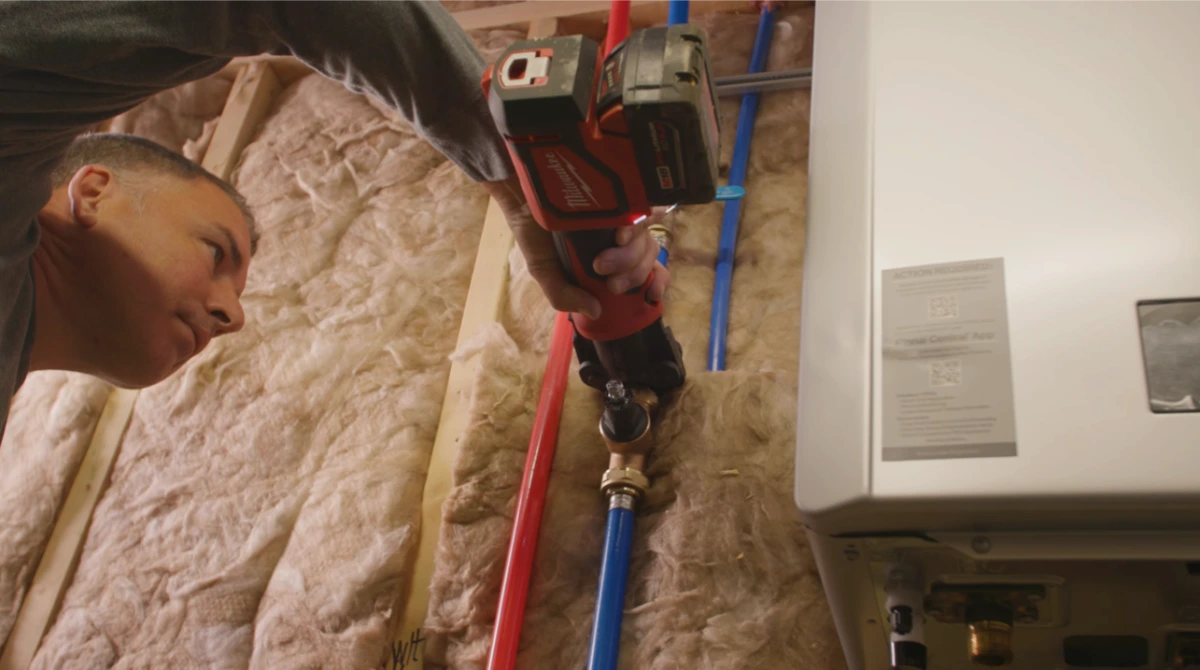
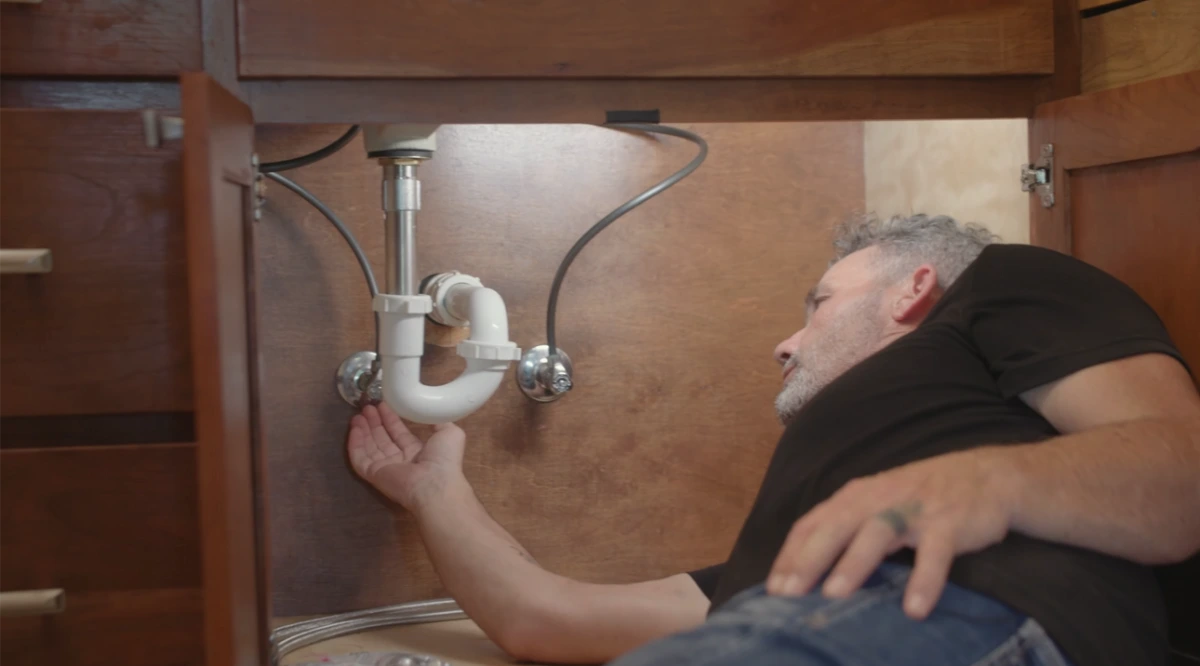
Walk through a typical pre-1940s Jamestown house and the freeze risk isn’t evenly distributed — it concentrates in a handful of predictable spots. Under the kitchen sink on an exterior wall, especially in additions built without full wall-cavity insulation. Behind the washing machine, where a supply line often runs through an unheated section of basement or an attached but unheated laundry room. Along the rim joist — the band of framing where your foundation meets your first-floor walls — which in older homes is sometimes only nominally insulated, if at all. And any hose bib or exterior spigot line that wasn’t properly shut off and drained before the first hard freeze of the season.
Knowing these specific risk zones in your own home lets you take targeted action — a $10 pipe sleeve on the one exposed run under your kitchen sink does more good than generic advice to “insulate your pipes” without knowing which pipes actually need it.
From First Freeze to Burst Pipe: A Timeline
Temperature drops below freezing at the pipe
Not necessarily the outdoor temperature — the temperature at that specific exposed section, which can be well below the ambient room temperature in an uninsulated space.
Ice begins forming at the coldest point
Usually near a joint, elbow, or the section closest to an exterior wall or vent.
Water pressure builds between the ice blockage and a closed faucet
This is the actual mechanism that bursts a pipe — not the ice itself, but trapped water with nowhere to expand.
The pipe splits, often at a seam or joint
Sometimes silently, if it’s behind a wall — you may not know until it thaws and water starts flowing through the split.
Thawing releases the trapped water through the split
This is often when homeowners first discover the problem — water appearing well after the coldest part of the cold snap has passed.
What to Do the Moment You Discover a Frozen Pipe
What you do in the first few minutes matters. Here’s the order that actually helps:
- ✓ Check if it’s already burst. If water is actively spraying or pooling, shut off your main water valve immediately — don’t wait.
- ✓ If it hasn’t burst yet, relieve the pressure. Open the nearest faucet on that line so water and steam have somewhere to go as it thaws.
- ✓ Apply gentle heat. A hair dryer or space heater aimed at the suspected frozen section works — never an open flame or torch near a pipe.
- ✓ Call us. If you can’t locate the frozen section, the pipe has already split, or you’re not comfortable handling it, that’s exactly what we’re here for.
How We Repair a Frozen or Burst Pipe
We shut off and relieve pressure if there’s any risk the pipe has split, thaw the affected section safely, then repair or replace just that section rather than the whole line where possible. Because galvanized and cast iron pipe degrades gradually, we’ll also flag any other exposed runs in your home that are likely to freeze next — so you’re not back on our schedule again in a few weeks. If the affected section is galvanized and showing significant corrosion beyond the immediate break, we’ll walk you through whether a targeted repiping of that run makes more sense than a repeated cycle of patch repairs each winter.
Winterizing a Jamestown Home Against Frozen Pipes
Insulate Exposed Runs
Foam pipe sleeves on any pipe in a basement, crawl space, or exterior wall cavity you can access.
Disconnect & Drain Hose Bibs
Before the first hard freeze, remove garden hoses and drain exterior spigot lines fully.
Keep a Trickle Running
On the coldest nights, a slow drip from an at-risk faucet relieves pressure buildup and keeps water moving.
Open Cabinet Doors
Under sinks on exterior walls, letting warmer room air reach the pipes during severe cold snaps.
Seal Foundation Gaps
Cold air infiltration through cracks and gaps near the foundation is often the real cause of a “cold spot” around a pipe.
Know Your Thermostat’s Lowest Setting
If you’re away for an extended period in winter, never let the house drop below roughly 55°F.
Cast Iron, Galvanized, and PEX: What’s Actually in Your Walls
A Jamestown home’s plumbing is rarely a single, uniform material — it’s usually a patchwork reflecting decades of piecemeal repairs. Original construction from the 1900s through 1930s typically used galvanized steel for supply lines and cast iron for drain stacks. Galvanized pipe corrodes from the inside out over many decades, gradually narrowing the interior diameter and becoming more brittle — which is exactly why a galvanized section is more likely to crack under the pressure of freezing than a newer copper or PEX line would be in the same spot. Cast iron drain stacks, while durable, can develop cracks at joints over a century of use. Renovations from the 1960s through 1990s often introduced copper supply lines, and more recent work frequently uses PEX — a flexible plastic tubing that has some genuine advantage in freeze resistance since it can expand slightly without cracking the way rigid metal pipe does. Knowing which material is actually running through your walls helps predict where your next freeze-related failure is likely to occur.
Why a Burst Pipe Costs More Than the Repair Itself
The plumbing repair for a burst pipe is often the smallest line item in the total cost of the incident. Water that’s been running unnoticed behind a wall or under a floor for even a few hours in an older Jamestown home can soak into original plaster and lath, subfloor, and insulation in ways that modern drywall construction handles very differently. Plaster doesn’t dry out and bounce back the way drywall sometimes can — it tends to crumble, stain, and require full replacement once thoroughly saturated. Basements finished with carpet or built-in shelving face similar issues if a burst pipe floods the space before it’s discovered.
This is the real argument for the prevention steps above: a $10 pipe sleeve or a habit of leaving cabinet doors open on the coldest nights is cheap insurance against a repair that, left unaddressed for even a day, can spread well beyond the original pipe.
Frozen Pipe Questions
How do I know if my pipe is frozen versus just not working?
No water at a single fixture during a hard freeze, especially one on an exterior wall or in the basement, is the classic sign. If every fixture in the house is affected, that’s more likely a different issue — call and describe what you’re seeing.
Can I thaw a pipe myself?
For an easily accessible pipe that hasn’t burst, gentle heat from a hair dryer can work. Never use an open flame, and if you can’t reach the frozen section or aren’t sure it hasn’t already split, call a licensed plumber.
How much does frozen pipe repair cost in Jamestown?
It depends on whether the pipe has burst and what material and location are involved. We give a real price before starting work, not after.
How can I prevent pipes from freezing again next winter?
Insulating exposed pipe sections, sealing drafts near foundation walls, and keeping cabinet doors open on very cold nights to let warm air reach under-sink pipes all help. We can point out your home’s specific risk spots during a repair visit.
Is a dripping faucet really enough to prevent freezing?
A slow, steady drip relieves the pressure buildup that causes bursting and keeps water moving through the line, which resists freezing better than standing still water. It’s a legitimate, low-cost precaution on the coldest nights.
What should I do if I’m going away for the winter?
Keep the thermostat no lower than roughly 55°F, shut off and drain exterior hose bibs, and consider having a neighbor check the house periodically during extended cold snaps.
Frozen Pipes in a Jamestown Rental
A frozen or burst pipe in a rental property falls squarely under New York Real Property Law § 235-b’s warranty of habitability — no heat and no water are both conditions a landlord is legally required to address promptly, not conditions a tenant has to just live with until it’s convenient. If you’re renting in Jamestown and discover a frozen pipe, document it in writing to your landlord immediately, noting the date and what you observed. If the pipe has already burst, treat it exactly as you would in an owned home: shut off the main if you know where it is and it’s safe to access, and get a licensed plumber out regardless of who authorizes the work. We take calls from tenants directly and coordinate with property owners on billing and access.
Frozen Pipe Repair Across Jamestown and Chautauqua County
We handle frozen and burst pipe calls throughout Jamestown’s neighborhoods — downtown’s older housing stock, the areas nearer Chautauqua Lake, and everywhere in between — plus the BPU-connected communities of Lakewood, Falconer, Celoron, Busti, Ellicott, Kiantone, Ashville, and North Harmony. Coverage extends into greater Chautauqua County as well, including Dunkirk, Fredonia, Westfield, and Mayville, and across the state line into Warren, Pennsylvania.
Dealing With a Frozen or Burst Pipe Right Now?
Licensed Master Plumber serving Jamestown, NY and Chautauqua County, 24/7.
Call (866) 471-4088